
Cervical cancer is one of the most preventable cancers, yet it accounts for 460,000 new cases and 231,000 deaths worldwide every year. Globally, it is the fourth most common cancer in women.
Well-organized screening programs have helped reduce cervical cancer burden in developed countries. However, in developing regions, these tests are often unavailable, expensive, or not implemented at scale—leading to persistently high rates.
In India, cervical cancer accounts for 6 to 29% of all cancers in women. Alarmingly, India bears about one-quarter of the global cervical cancer burden.
Preventive Measures Against Cervical Cancer
Infection with human papillomavirus (HPV) is the primary risk factor for cervical cancer. Among over 50 types, 15 to 20 HPV types are linked to cervical cancer.
Other contributing factors include:
- Sexual activity before age 25
- Multiple sexual partners
- Sexually transmitted infections
- Family history of cervical cancer
- Smoking
- Immunocompromised conditions (e.g., HIV/AIDS)
While condoms offer some protection, evidence is limited. The most effective prevention strategies are HPV vaccination and regular cervical cancer screening.
Types of HPV Vaccines Available in the Market
Gardasil
This vaccine prevents infection from four HPV types (6, 11, 16, 18) that cause genital warts and cervical, vaginal, vulvar, and anal cancers. It is a 0.5mL intramuscular injection that induces type-specific antibodies.
Gardasil 9
Protects against nine HPV types, preventing genital warts, precancerous lesions, and cancers of the cervix, vagina, vulva, anus, head, neck, and penis. It works by stimulating antibodies against viral proteins, priming the immune system.
Cervarix
Prevents cervical cancer caused by HPV types 16 and 18. It stimulates IgG neutralizing antibodies and is administered as a 0.5mL intramuscular injection.
Vaccination Guidelines
The first HPV vaccine (Gardasil) was FDA-approved in 2006; Cervarix in 2009. In 2018, the FDA approved HPV vaccination for men and women up to age 45.
In India, both Gardasil and Cervarix are used and considered safe and effective.
Advisory Committee on Immunization Practices (ACIP) Recommendations:
- Age 9–26: Recommended for all. Vaccination can start at age 9, ideally at 11–12. Catch-up vaccination is advised for those not fully vaccinated by age 26.
- Age 27–45: Shared clinical decision-making may be used for unvaccinated individuals.
- Over 45: Not recommended.
- Pregnant women: Vaccination should be deferred until after childbirth due to limited safety data.
Dosage and Administration
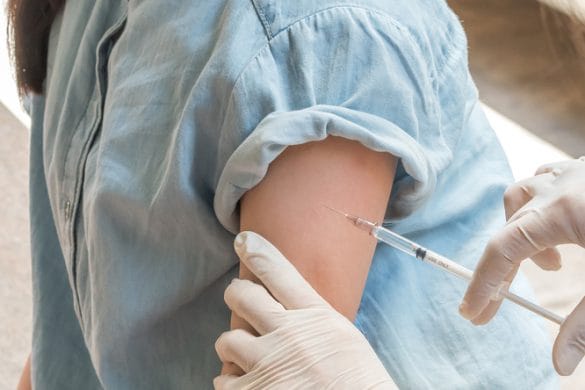
Administered intramuscularly in the deltoid or thigh.
| Recommended Doses | Dosing Schedule |
|---|---|
| 2 doses (ages 9–14) | First dose at 0, second between 6–12 months; minimum 5-month gap |
| 3 doses (ages 15+, immunocompromised) | 0, 1–2 months, 6 months; min 4 weeks between 1st and 2nd, 12 weeks between 2nd and 3rd, 5 months between 1st and 3rd |
Benefits of Including HPV Vaccine in UIP
The Universal Immunisation Programme (UIP) is one of the world’s largest public health initiatives, aiming to protect people from life-threatening diseases.
Healthcare professionals and advocacy groups in India are pushing for HPV vaccine inclusion. In 2017, the National Technical Advisory Group on Immunisation (NTAGI) approved its introduction—now awaiting implementation.
Including the HPV vaccine in UIP would:
- Improve nationwide vaccine coverage
- Reduce cervical cancer incidence and mortality
- Promote health equity, especially among underserved populations
Cost of HPV Vaccination in India
A single dose costs between ₹2,000 and ₹3,000. With 2–3 doses required, the total cost can be prohibitive for many families, highlighting the need for public funding through UIP.
How Safe Are HPV Vaccines?
Years of research and monitoring confirm that HPV vaccines are safe and effective.
Common side effects are mild and temporary:
- Pain, redness, or swelling at injection site
- Fever
- Dizziness
- Nausea
- Headache
- Feeling tired
- Muscle or joint pain
These side effects should not deter vaccination. The benefits of preventing cancer far outweigh the minimal risks.