
Onco team, Consultant Medical Oncologist at Our Cancer Centres, Hyderabad, discusses a real case that illustrates advances in treating Stage IV breast cancer.
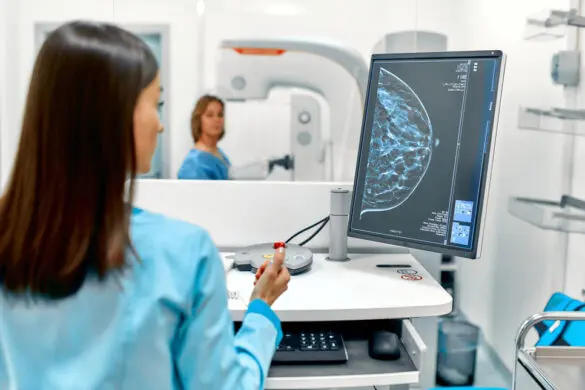
Mrs. Kamala, a 45-year-old mother of two, notices a painless lump in her left breast while taking a bath. She consults her gynecologist, who refers her to an oncologist. A mammogram and biopsy confirm breast cancer, and a PET scan reveals that the cancer has spread to her bones and lymph nodes in the stomach.
Increasing trend of breast cancer in India
This situation is increasingly common in India’s urban population. Breast cancer is now the most common cancer in India, with estimates suggesting that 1 in 20 urban women will develop it in their lifetime.
The reasons are multifactorial: delayed childbirth (after age 30), fewer children, shorter breastfeeding periods, and increased tobacco and alcohol use. Notably, 90% of patients have no family history of breast cancer.
Stage IV is no longer a death sentence
Earlier, a Stage IV diagnosis was equated with terminal illness. Today, with better understanding and classification of breast cancer types, treatment and survival outcomes have improved drastically. Treatment depends on biopsy findings.
Treatment approach in Kamala’s case
Mrs. Kamala feared that her breast would be surgically removed, but her oncologist reassured her that surgery doesn’t improve survival for Stage IV cancers. She tested positive for the HER2 protein and began a regimen of Nab-Paclitaxel and Trastuzumab (a targeted therapy).
Her response was excellent—her lump disappeared within a few doses. With scalp cooling technology, hair loss was minimized. She resumed her daily life and remained in remission two years after her diagnosis.
Importance of awareness and screening
This case demonstrates that even Stage IV breast cancer can be managed successfully for years. Women should consult oncologists and undergo mammogram screenings from age 45 onward. Cancers detected early (Stage I or II) have a 90–95% cure rate with timely treatment.