
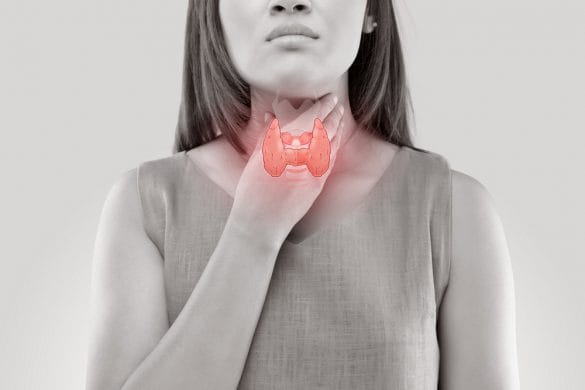
Cancers are named based on the organ or tissue where they originate. Thyroid cancers start in the thyroid gland, a butterfly-shaped organ in the front of the neck.
The thyroid produces hormones that regulate metabolism, heart function, digestion, growth, body temperature, and bone health. These hormones are especially crucial for brain development in children.
Are Thyroid Nodules Common?
A thyroid nodule is an abnormal growth of thyroid cells. These nodules are very common—up to half of people over 60 have at least one.
Most nodules are benign (95%). However, some can be cancerous, including papillary, follicular, medullary, and anaplastic types.
Who is More Likely to Get This Cancer?
- Women are 3 times more likely than men to develop thyroid cancer.
- Most affected women are between 40–50; most men are 60–70.
- Iodine deficiency increases risk.
- Family history of thyroid cancer increases personal risk.
- Genetic conditions like familial adenomatous polyposis or Cowden disease raise risk.
- Childhood exposure to radiation is a known risk factor.
What Can I Do to Prevent Thyroid Cancer?
Most risk factors (age, gender, genetics) cannot be changed. However, ensuring adequate iodine intake can help.
Consume iodine-rich foods like dairy and fish. In India, iodized salt is widely available and helps maintain thyroid health.
Be alert to symptoms for early detection, which improves cure rates.
How Can I Know If I Have Thyroid Cancer?
Common symptoms include:
- A growing lump in the neck
- Swollen neck glands
- Neck pain that spreads to the ears
- Hoarseness or voice changes
- Trouble swallowing or breathing
These symptoms are common to many conditions. However, if they persist despite treatment, consult a doctor.
What is Papillary Carcinoma Thyroid Cancer?
Papillary carcinoma is the most common type of thyroid cancer, accounting for about 80% of cases.
It starts in the follicular cells of the thyroid and usually affects one lobe. It is often slow-growing and may not cause symptoms beyond a neck mass.
About 80% of radiation-related thyroid cancers are of this type.
Is Papillary Carcinoma Thyroid Cancer Curable?
Yes, it is highly curable. The 10-year survival rate is over 90%.
Early detection leads to better outcomes. While it can spread to nearby lymph nodes, distant spread to lungs, liver, or bones is rare.
How Does the Doctor Check If It Is Thyroid Cancer?
The diagnostic process includes:
- Physical exam: To assess the thyroid and overall health.
- Ultrasound: To evaluate the size, number, and nature (solid or fluid-filled) of nodules.
- Blood tests: To measure T3, T4, and TSH levels.
- Biopsy: A fine needle aspiration (FNA) collects cells from the nodule for microscopic examination. This is the most reliable way to confirm cancer.
- CT or MRI: For large or complex lesions, especially those behind the sternum.
How is Papillary Carcinoma Thyroid Treated?
Treatment depends on the cancer stage (I to IV), which is based on tumor size, spread, and patient age (under or over 55).
Surgery
The primary treatment. Options include:
- Thyroid lobectomy: Removal of the affected lobe.
- Total thyroidectomy: Removal of the entire gland.
- Lymph node removal if cancer has spread.
Radioiodine Therapy
Given 4–6 weeks after surgery to destroy any remaining thyroid tissue or metastases. Recommended based on tumor size, risk category, and prognosis.
Radiation Therapy
Used for extensive local disease that cannot be surgically removed.
Chemotherapy
Considered a palliative option for advanced or recurrent disease to improve quality of life.
Targeted Therapy
Used in advanced cases where radioiodine fails. Targets specific genetic mutations or proteins driving cancer growth.
Thyroid Hormone Replacement Therapy
Lifelong treatment after total thyroidectomy. Thyroxine dosage is adjusted to maintain optimal TSH levels.
Follow-Up and Long-Term Care
After treatment, regular monitoring is essential and includes:
- Neck ultrasound
- Serum TSH and thyroglobulin levels
- Whole-body iodine scan (if needed)
Maintain a healthy diet, avoid tobacco and alcohol, and adhere to your doctor’s follow-up schedule for the best long-term outcomes.